Can Machine Vision Cables Operate in Cryogenic Environments
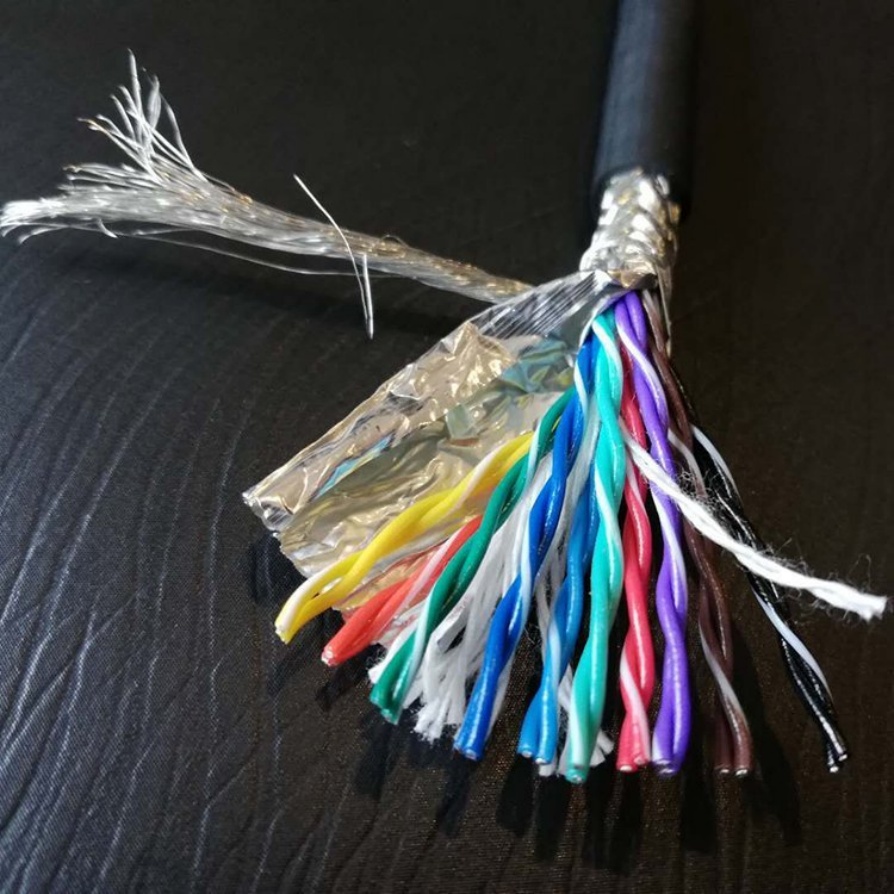
The short answer is: standard machine vision cables cannot reliably operate in cryogenic environments, but specially engineered solutions using micro coaxial cable technology can.
This distinction is critical. While your off-the-shelf Camera Link or GigE cable might survive a trip to a food freezer, it will catastrophically fail in a laboratory setting involving liquid nitrogen (77 K / -196°C) or, more extremely, liquid helium (4 K / -269°C).
To understand why, we need to move beyond simple temperature ratings and examine the physics of materials at cryogenic temperatures, the specific demands of machine vision signal integrity, and how to design or select a cable that can survive the “deep freeze.”
1. The Cryogenic Challenge: More Than Just “Feeling Cold”
When we discuss cryogenic environments, we are talking about temperatures below -150°C (-238°F). This is where standard industrial cable design falls apart. The primary issues are material brittleness, thermal contraction, and microphonics.
Material Embrittlement
Most standard machine vision cables use a PVC (Polyvinyl Chloride) or standard PE (Polyethylene) jacket. While PVC is economical, it has a Glass Transition Temperature (Tg) that makes it stiffen significantly below 0°C and become brittle below -20°C. In a cryogenic plunge, PVC essentially turns to glass and shatters under mechanical stress.
Even standard PE, while better, becomes rigid. The solution lies in using specialized polymers like PTFE (Teflon), FEP, or PFA. These materials retain flexibility at extremely low temperatures and exhibit low outgassing—a critical property for vacuum-insulated cryostats .
The Thermal Contraction Nightmare
Different materials shrink at different rates when cooled. A standard cable with a Copper (Cu) conductor and a PE dielectric might seem fine until you cool it rapidly. Copper contracts by approximately 0.33% from Room Temp to 4K, while the dielectric and jacket materials contract differently.
This differential contraction creates immense thermo-mechanical stress. In a standard assembly, this can lead to:
Delamination:The bond between the shield and the dielectric breaks.
Connector Failure:The solder joints or crimps fracture because the cable shrinks away from the connector body.
Impedance Instability:The geometry of the cable changes, causing the characteristic impedance to fluctuate, which is a death sentence for high-speed serial data used in machine vision .
2. Signal Integrity at Cryo: Why Machine Vision is Especially Vulnerable
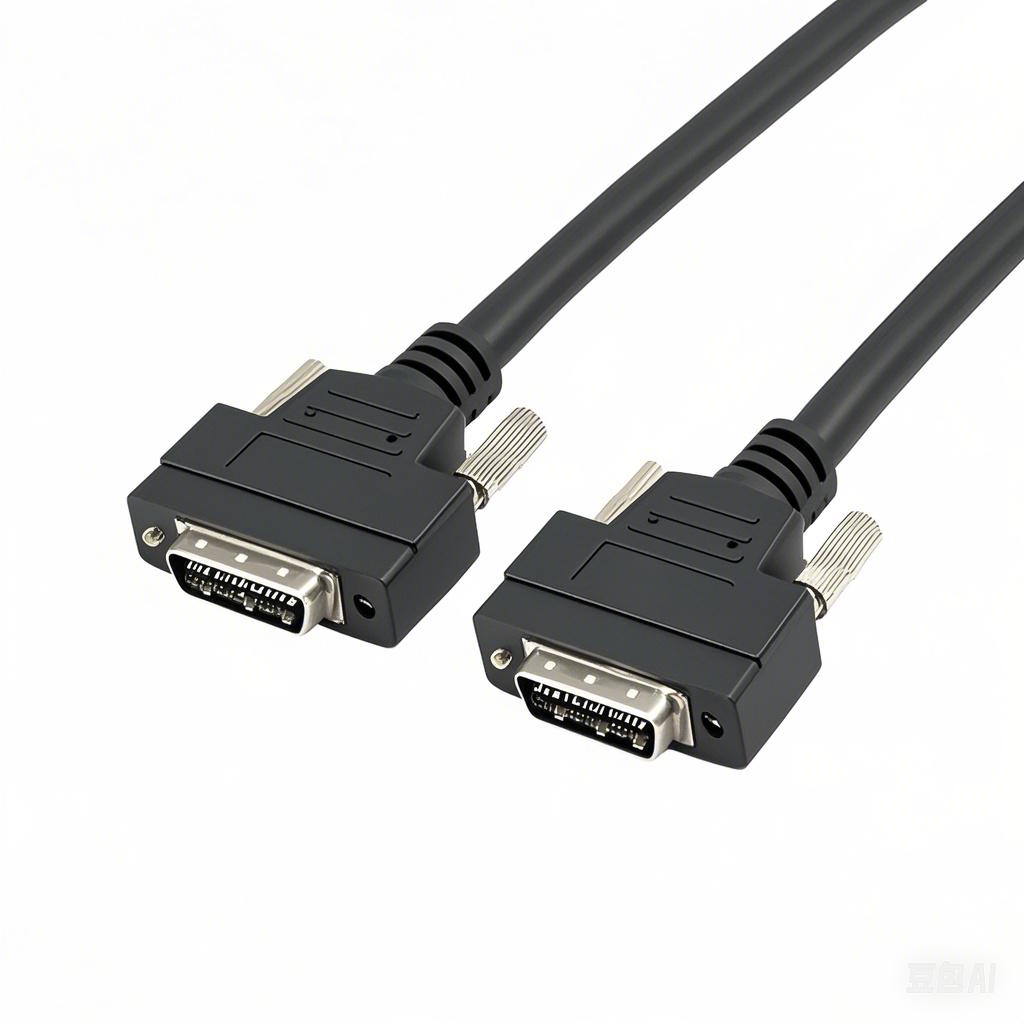
Machine vision relies on high-bandwidth, low-latency data transmission (CoaXPress, GigE Vision, Camera Link HS). These protocols are sensitive to impedance matching (typically 50Ω or 100Ω differential).
The “Cold Coefficient” of Dielectrics
The dielectric constant (Dk) of a material dictates the speed at which a signal travels. As temperature drops, the Dk of most polymers increases. For a micro coaxial cable, this means:
Velocity Change:The signal velocity slows down.
Impedance Shift:Since Impedance (Z0) is inversely proportional to the square root of Dk (Z0≈Dk1), the impedance of the line decreases as the temperature drops.
If you have a cable optimized for 50Ω at 20°C, it might drop to 48Ω or lower at 77K. This mismatch causes signal reflections, increasing Return Lossand Insertion Loss. In a cryostat, this can manifest as a “smeared” image or a complete loss of the video feed the moment cooling begins.
Microphonics: The Vibration Problem
Cryogenic setups often involve pumps and compressors, generating low-frequency vibration. A standard cable jacket transmits this vibration directly to the inner conductor. In a high-impedance line, this mechanical movement translates into electrical noise (microphonics). For a machine vision system trying to capture a stable image of a quantum dot or a superconducting circuit, this noise floor is unacceptable .
3. Engineering the Solution: The Cryo-Compatible Micro Coaxial Cable
To build a cable that works, we must specifically address the material science. This is where the “Micro Coaxial Cable” architecture shines, as it allows for precise control over materials.
Jacket & Dielectric Selection
Standard Machine Vision Cable:PVC or LDPE. Fails at cryo.
Cryogenic Solution:PTFE or FEP. These fluoropolymers have a wide operating range (e.g., PTFE: -65°C to +200°C) and maintain flexibility. They also have stable Dk values across temperature ranges .
Conductor & Shield Strategy
To mitigate thermal contraction, engineers often use specialized alloys or construction techniques.
Material Choice:While Oxygen-Free High Conductivity (OFHC) Copper is common, some applications use Copper-Nickel (CuNi) alloys. CuNi has higher electrical resistance than copper but a lower thermal conductivity, which is beneficial for reducing heat load into the cryostat.
Stabilization:The cable must be physically and thermally anchored at multiple points within the cryostat to manage strain and heat transfer .
Connectorization: The Weakest Link
A cable is only as strong as its termination. Standard crimp tools create air gaps and stress points.
Best Practice:Use connectors designed for cryogenics (e.g., specific SMA, SMP, or SMC variants). The solder or crimp must wet properly, and strain relief must be applied using cryo-compatible adhesives (like Vespel or specialized epoxy) rather than standard rubber boots .
4. Performance Comparison: Standard vs. Cryo-Optimized
Here is a direct comparison of what happens to a standard cable versus a purpose-built cable when plunged into liquid Nitrogen (77K):
Feature
Standard Machine Vision Cable (PVC/PE)
Cryo-Optimized Micro Coaxial Cable (PTFE)
Mechanical State
Becomes rigid and brittle. Jacket cracks if flexed.
Remains flexible. Can often be bent post-cooling.
Impedance Stability
Drifts significantly due to Dk change and contraction.
Engineered drift. Often compensated for in design.
Insertion Loss
Increases dramatically due to impedance mismatch.
Predictable increase, often lower than standard cables.
It’s not just theoretical. The demand for cryo-compatible machine vision is growing in specific high-tech sectors:
Quantum Computing:Researchers need to align optics (for laser control of qubits) inside dilution refrigerators operating at Millikelvin temperatures. The camera cable must transmit data without introducing heat.
Space Simulation:Satellite components are tested in thermal vacuum chambers (TVAC) that cycle between solar heat and the cold of space. Cables must survive these rapid transitions without signal degradation.
Superconductor R&D:Observing phase transitions in materials often requires high-speed cameras to capture magnetic flux movements or thermal events at 4K .
6. Conclusion: How to Procure the Right Cable
If you are asking this question, it means you are likely moving beyond standard industrial automation into a realm where precision is paramount.
Do not use a standard catalog cable.It will fail.
Demand Material Data Sheets.Ask the supplier specifically about the Jacket (must be PTFE/FEP), Dielectric, and Connector materials.
Specify the Temperature Range.Are you going to 77K (Nitrogen) or 4K (Helium)? The engineering requirements differ significantly.
Ask about Thermal Cycling.A good supplier should be able to tell you how many thermal cycles (Room Temp -> Cryo -> Room Temp) their assembly is rated for .
The fusion of micro coaxial cable technology with cryogenic material science is what enables modern physics and advanced engineering. By selecting the correct materials and construction, a machine vision cable can indeed not only survive but thrive in the most extreme cold environments on Earth.
Meta Description: Discover premium Robotic Vision System Cables engineered for seamless data transmission, durability, and precision in industrial automation. Ensure flawless vision system performance.
Enhance Automation Precision with.
Shielded Twisted-Pair Vision Cable – Ultra-Clear Signal Transmission for Demanding Environments
Ensure flawless video and data transmission in high-interference environments with our Shielded Twisted-Pair (STP) Vision Cable. Engineere.
Meta Description: Experience seamless 4K/8K video transmission with our High-Speed Anti-Interference Vision Cable. Engineered for crystal-clear visuals, robust durability, and interference-free performance. Perfect for gaming, profes.
High-speed factories demand flawless synchronization between machines and vision systems. Yet, challenges like electromagnetic interference (EMI), cable fatigue, and data bottlenecks often disrupt operations. The right machine vision cab.
The Precision Imaging Dedicated Vision Cable is a cutting-edge connectivity solution designed to deliver crystal-clear image transmission in high-stakes environments. Optimized for industrial automation, medical imaging, machine vision, .
Meta Description: Discover the Flexible & Bend-Resistant Vision Cable, engineered for precision imaging in demanding environments. Durable, reliable, and built to last. Perfect for industrial, medical, and robotic applications.
Int.
Subtitle: A High-Performance Signal Cable Designed for 3D Scanners, Ensuring Lossless Data and Minimal Latency
Product OverviewThe 3D Scanner Vision Signal Cable is a premium signal transmission cable engineered for both industrial a.
Enhance the reliability and performance of your automated systems with our Industrial-Grade Machine Vision Cable—engineered to deliver unparalleled signal integrity, durability, and speed for demanding industrial applications. Designed f.
Product Overview: Machine Vision Cables
Machine vision cables are specialized components designed to ensure high-speed, stable data transmission and signal integrity in automated imaging systems. Key features include:
Technical S.
Elevate your visual data transmission with the IP67 Waterproof Vision Connection Cable, engineered to deliver seamless performance in the harshest conditions. Designed for industrial, outdoor, and mission-critical applications, this rugg.