Industrial Machine Vision Cable | Compatible with All Brands
In the grand architecture of Industry 4.0, where milliseconds dictate efficiency and microns define quality, the spotlight often shines brightest on the “brain” (AI processors) and the “eyes” (industrial cameras). Yet, the silent workhorse connecting them—the industrial machine vision cable—remains the unsung hero. Often overlooked until failure strikes, this cable is the central nervous system of your automated inspection line.
If you are sourcing an Industrial Machine Vision Cable compatible with all brands, you are likely searching for more than just a wire. You are looking for signal integrity, zero downtime, and the peace of mind that comes with universal interoperability. This guide dives deep into the engineering nuances of machine vision cabling, exploring how the right cable choice acts as a force multiplier for your automation ROI.
The Critical Role of Signal Integrity in Vision Systems
It is tempting to view a cable merely as a passive conduit. However, in high-speed imaging applications, the cable is an active component of the transmission line. A mismatch in impedance or a lapse in shielding doesn’t just slow down data; it corrupts it.
Imagine a high-resolution AOI (Automated Optical Inspection) system on a PCB assembly line. The camera captures thousands of images per minute. If the machine vision cableintroduces jitter or attenuation, the frame grabber receives noisy data. This leads to “false rejects,” where good products are thrown out, or worse, “escapes,” where defective products reach the customer. The cost of a cheap cable is rarely the price of the cable itself; it is the cost of wasted material, rework, and damaged reputation.
To ensure data integrity, industrial cables must adhere to strict impedance control (typically 100 ohms differential for data pairs) and utilize advanced insulation materials that maintain dielectric consistency across temperature fluctuations. When we talk about compatibility with all brands, we are fundamentally talking about adhering strictly to the AIA (Automated Imaging Association) standards that govern interfaces like GigE Vision, USB3 Vision, and Camera Link.
Navigating the Interface Jungle: Matching Cables to Protocols
Not all machine vision cables are created equal. The interface standard of your camera dictates the physics of the cable required. Here is a breakdown of the major protocols and what to look for in a compatible cable assembly.
1. GigE and 10GigE Vision Cables
GigE Vision is the workhorse of the industry, prized for its long-distance capability (up to 100 meters) and Power over Ethernet (PoE) functionality.
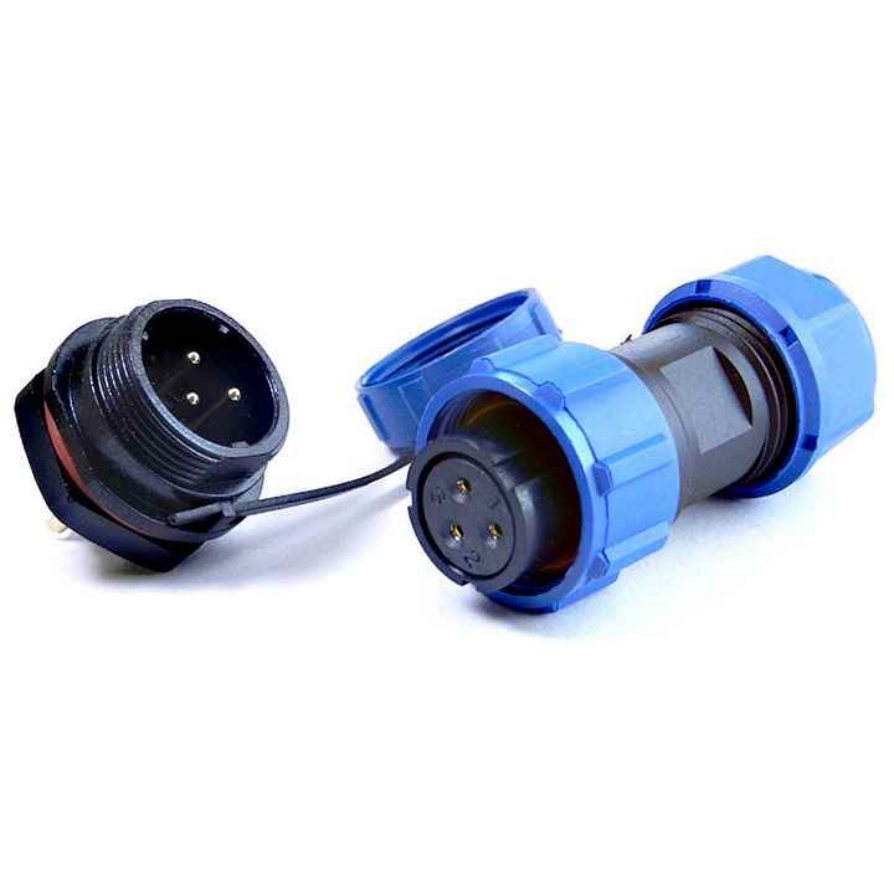
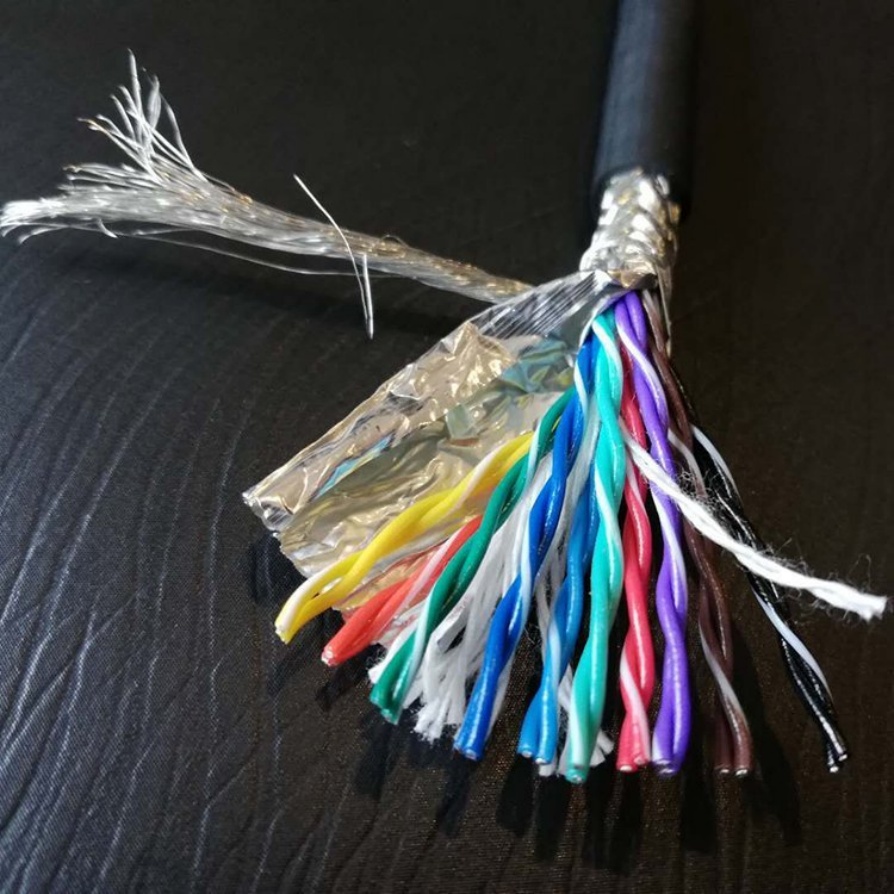
- What to look for:High-quality CAT6A or CAT7 shielded twisted pair (STP) cables are essential. For industrial environments, look for M12 X-coded connectorsto RJ45 conversions. These provide IP67/IP68 ratings, protecting against dust and washdown procedures common in food and beverage or pharmaceutical manufacturing.
- Compatibility Note:A true industrial GigE cable must support the full frequency spectrum required for 1Gbps or 10Gbps transmission to prevent packet loss.
2. USB 3.0 and USB 3.1 Vision Cables
USB offers plug-and-play simplicity and high bandwidth (up to 5 Gbps for 3.0 and 10 Gbps for 3.1), making it ideal for compact embedded vision systems.
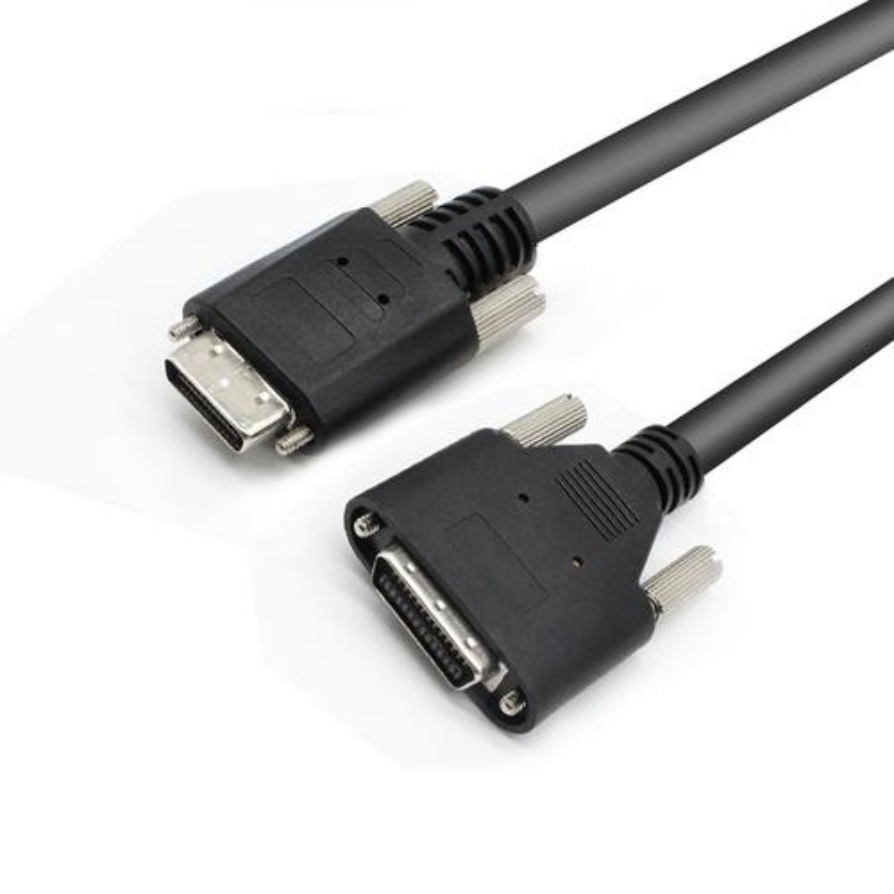
- What to look for:Because USB signaling is sensitive to noise, robust shielding is non-negotiable. Industrial USB cables replace fragile consumer plastic clips with screw-locking mechanisms(Micro-B or Type-C with thumbscrews). This ensures the cable stays connected despite the constant vibration of a moving robotic arm.
- Compatibility Note:Ensure the cable is certified by the USB Implementers Forum (USB-IF) and compliant with the USB3 Vision standard to guarantee plug-and-play compatibility with Basler, FLIR, and other leading brands.
3. Camera Link and Camera Link HS
For applications requiring massive bandwidth and deterministic data transfer, Camera Link remains the gold standard.
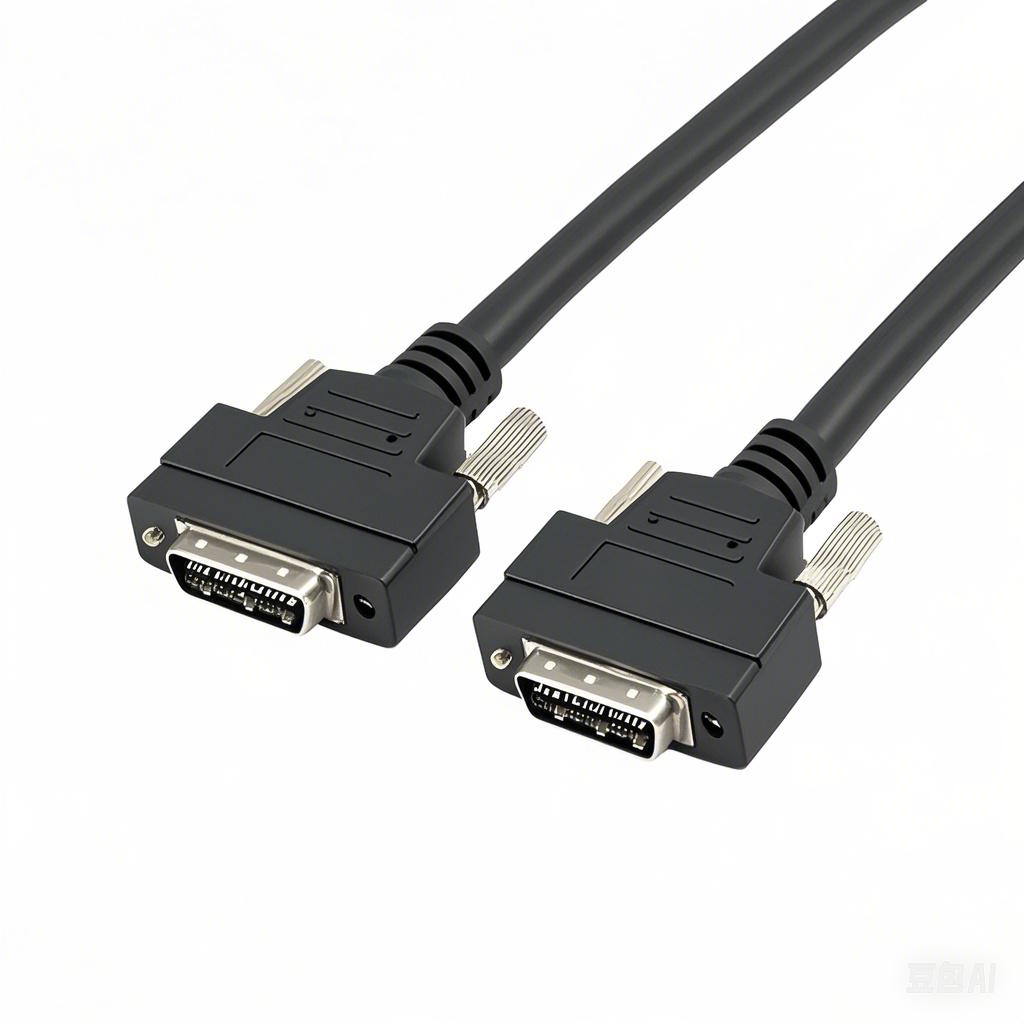
- What to look for:These cables utilize shielded parallel pairs or coaxial lines. They come in various configurations (Base, Medium, Full, Deca) and connector styles (MDR26, SDR, HDR).
- Compatibility Note:Precision is key here. The pinouts must match the camera and frame grabber exactly. High-end industrial cables offer Power over Camera Link (PoCL) capabilities, reducing cable clutter.
4. CoaXPress (CXP)
CXP is the frontier of high-speed imaging, supporting data rates up to 12.5 Gbps per channel (and beyond with CXP-12).
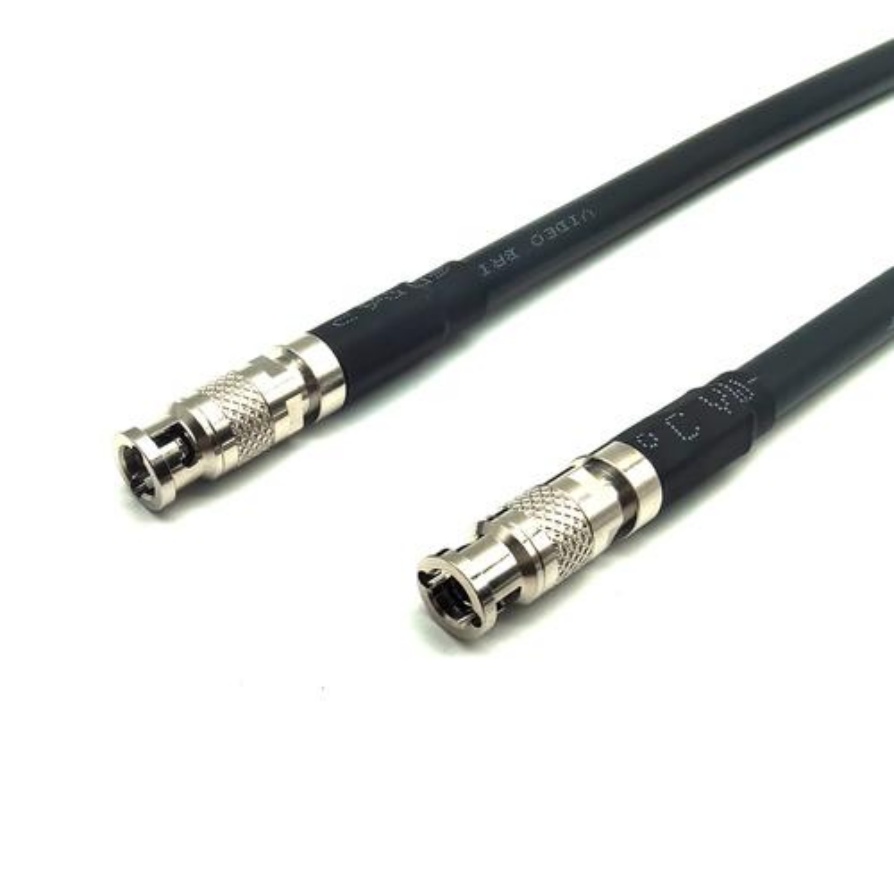
- What to look for:Utilizing 75-ohm coaxial cables, CXP cables are built for extreme speed and long distances (up to 100m+). The shift towards BNC and DIN 1.0/2.3 connectorsallows for high-density port configurations on frame grabbers.
- Compatibility Note:As CXP is often used in 8K and high-frame-rate applications, the cable’s return loss and skew parameters must be tightly controlled.
Built to Endure: Mechanical and Environmental Resilience
An office patch cable would disintegrate within weeks in a factory setting. Industrial machine vision cables are engineered to survive the “MICE” environment: Mechanical stress, Ingress (water/dust), Climatic (temperature), and Electromagnetic interference.
Dynamic Flexing and Torsion
In robotic pick-and-place applications or 6-axis arms, cables are in constant motion. Static cables will quickly develop fractures in the copper strands.
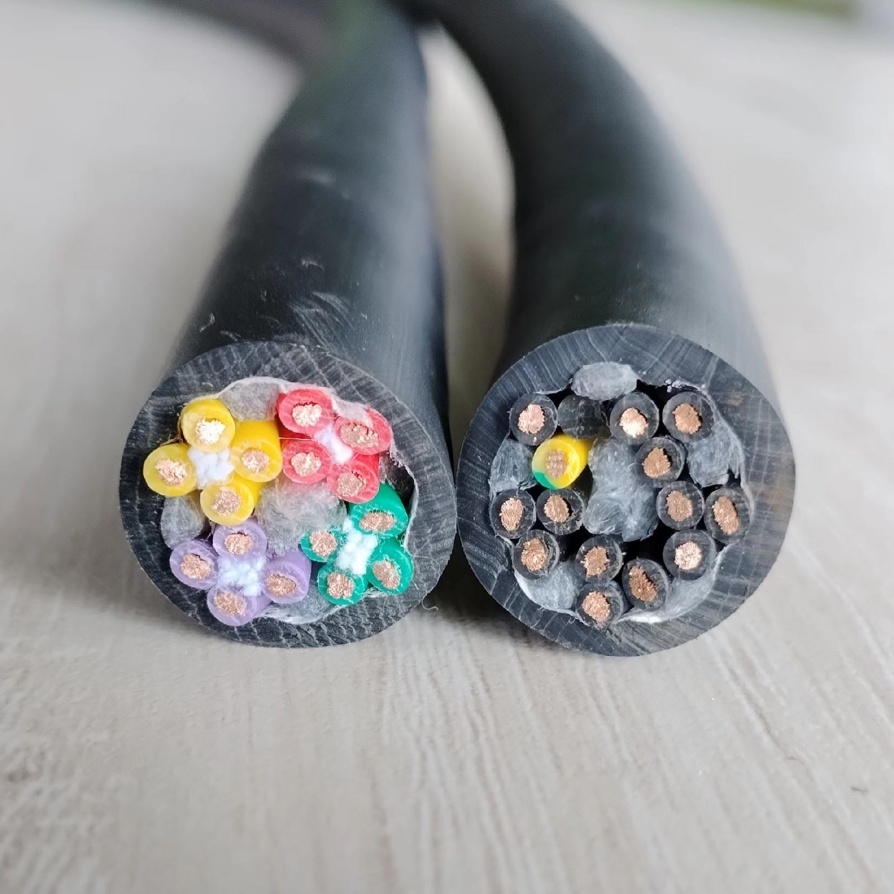
- The Solution:Look for high-flex cablesspecifically designed for drag chains (cable carriers) or robotic torsional movement. These cables use finely stranded tinned copper conductors and specialized TPE/PUR jackets. A premium cable will withstand over 10 million bending cycles and 360-degree torsion without signal failure.
Battle Against EMI/RFI
Factories are noisy places filled with variable frequency drives (VFDs) and high-voltage machinery. Electromagnetic interference can inject noise into your video feed, creating artifacts that confuse your vision software.
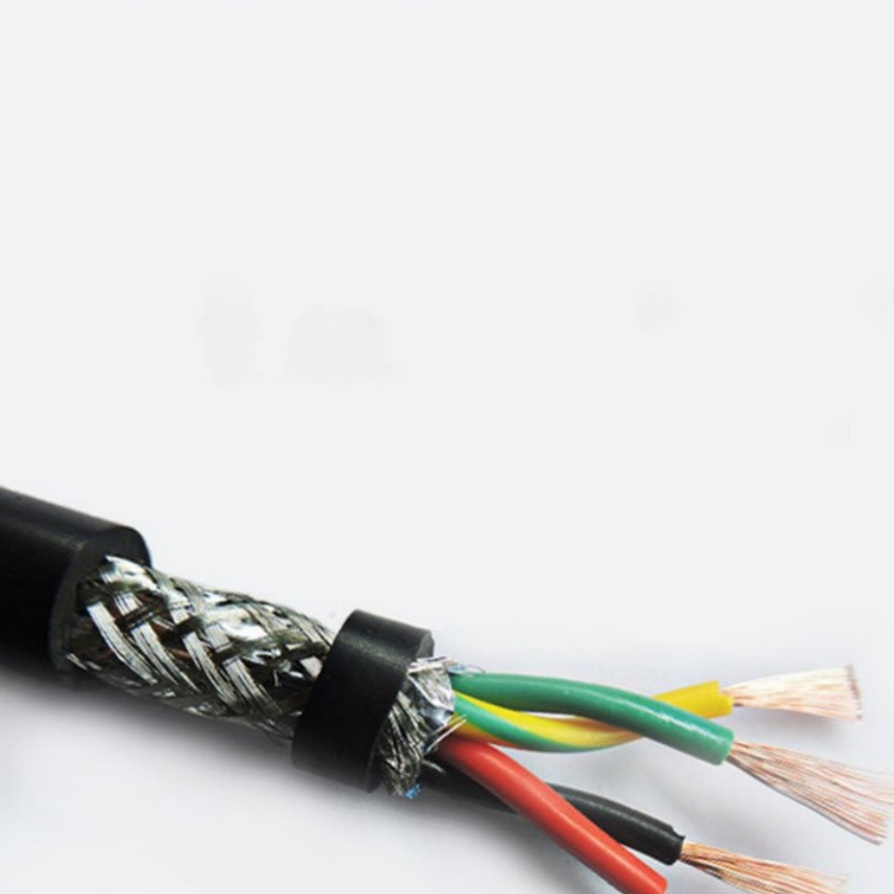
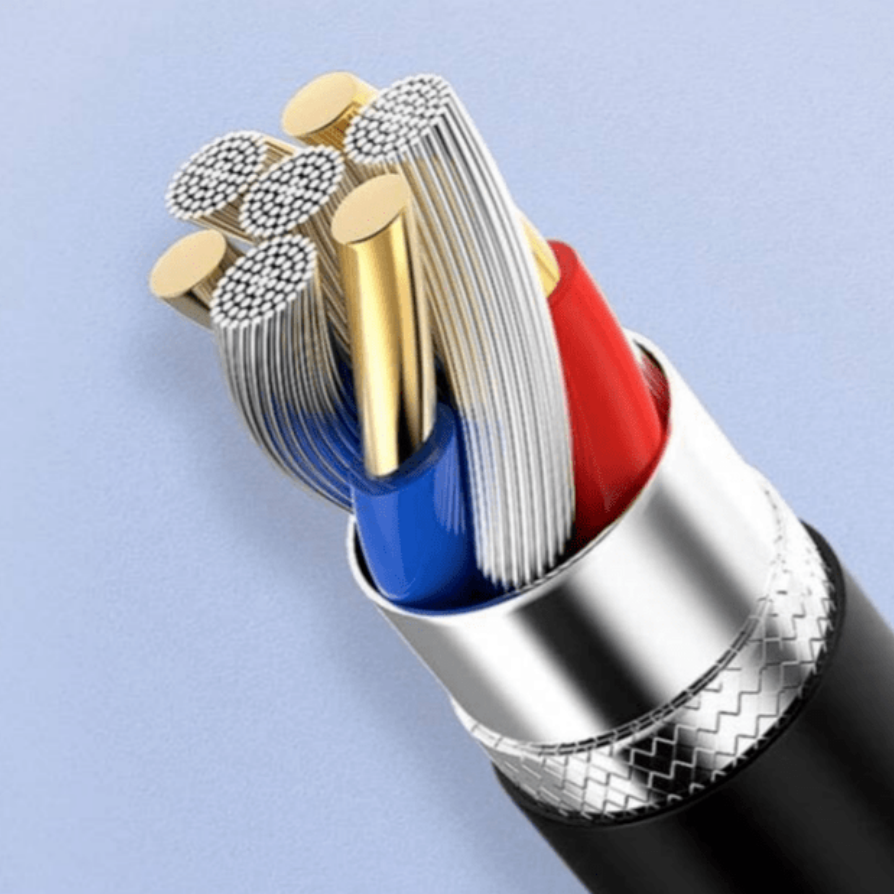
- The Solution:Multi-layer shielding is your armor. A combination of aluminum foil (for high-frequency reflection) and tinned copper braid (for low-frequency absorption) provides comprehensive EMI protection. For extreme environments, double-shielded constructions are recommended.
Chemical and Thermal Resistance
From the coolant fluids in CNC machining to the high-heat ovens in glass manufacturing, cables face chemical assault.
- The Solution:Polyurethane (PUR) jackets offer superior resistance to oils, greases, and abrasion compared to standard PVC. Furthermore, specialized compounds allow cables to operate in extreme cold (-40°C) or intense heat (+80°C to +120°C), ensuring the insulation doesn’t crack or melt.
Universal Compatibility: Bridging the Brand Gap
One of the biggest pain points for integrators is vendor lock-in. You shouldn’t need a proprietary cable for every camera brand. The promise of an Industrial Machine Vision Cable compatible with all brandsrelies on strict adherence to the GenICam and standard interface specifications.
Pinout Precision
Whether you are connecting a Basler acecamera, a Teledyne DALSAline scan, a JAImulti-sensor, or a Sonyblock camera, the underlying electrical language is standardized. High-quality third-party cables replicate the original manufacturer’s pinouts with surgical precision. This includes:
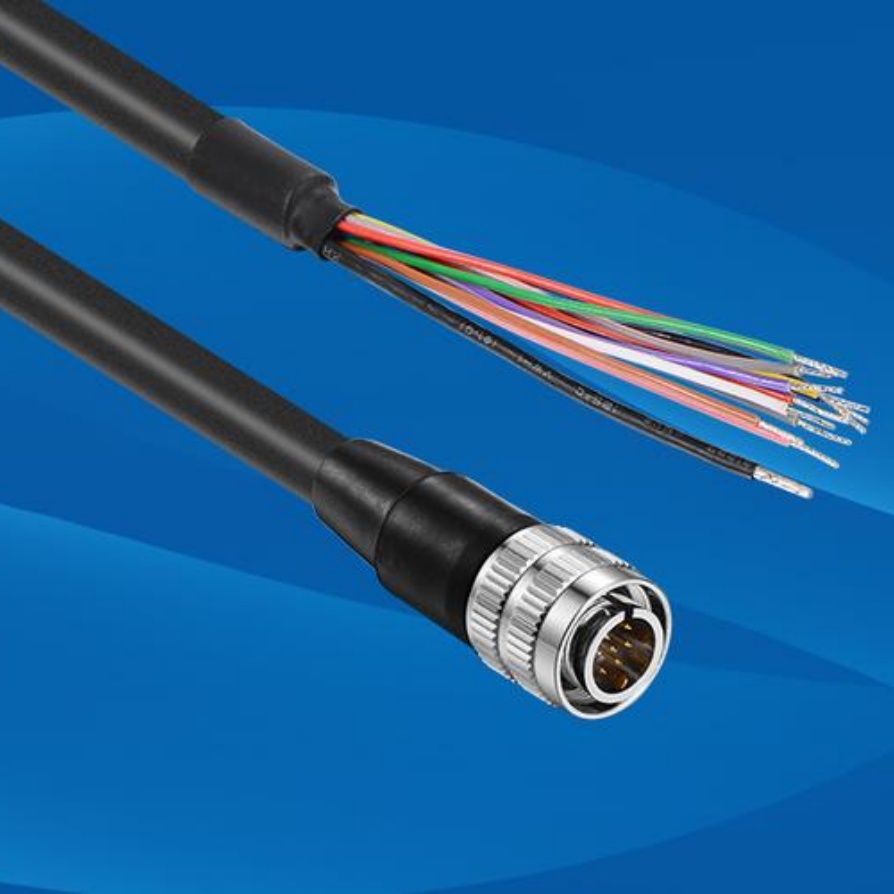
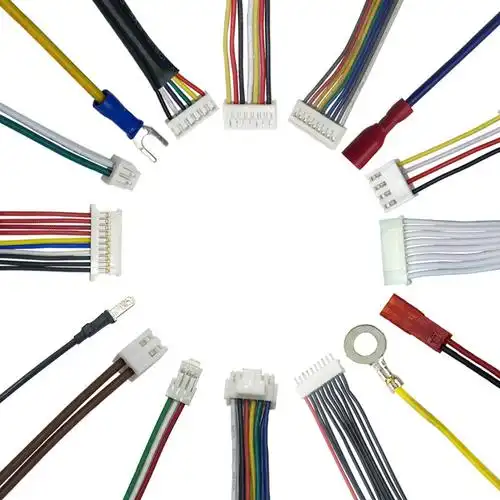
- Power/IO Cables:Often using Hirose HR10or M12connectors for trigger and strobe signals.
- Data Cables:Matching the exact impedance and shielding profiles of OEM cables.
Case Study: The Integrator’s Dilemma
Consider a logistics sorting facility upgrading to AI-driven barcode readers. They use a mix of Cognexand Keyencecameras. By switching to a universal, high-quality industrial cable supplier, the facility reduced its spare parts inventory by 60%. Because the cables were rated for higher flex cycles than the originals, they also extended the maintenance interval from 6 months to 18 months, significantly lowering the Total Cost of Ownership (TCO).
Future-Proofing with Fiber Optics and Miniaturization
As we look toward the next decade of automation, two trends are reshaping cable requirements: the need for longer distances and smaller footprints.
Fiber Optic Vision Cables:For applications requiring data transmission over hundreds of meters—such as in steel mills or large-scale security inspection—copper reaches its limit. Active Optical Cables (AOCs) convert electrical signals to light, allowing for massive bandwidth over extreme distances with zero EMI susceptibility.
Miniatururization:As collaborative robots (cobots) become smaller, the space for cabling shrinks. The industry is seeing a shift toward micro-coaxial cables and thinner, high-density connectors that deliver high performance without adding bulk to the robot joints.
Conclusion: The Strategic Asset in Your Automation Stack
Selecting an Industrial Machine Vision Cable compatible with all brandsis not a mundane procurement task; it is a strategic decision. It is the difference between a vision system that performs flawlessly and one that flickers under pressure.
By investing in cables that offer superior shielding, verified high-flex endurance, and universal protocol compliance, you are not just buying connectivity. You are buying uptime, accuracy, and the confidence to push your automation systems to their limits. Don’t let the smallest component be the weakest link in your smart factory.