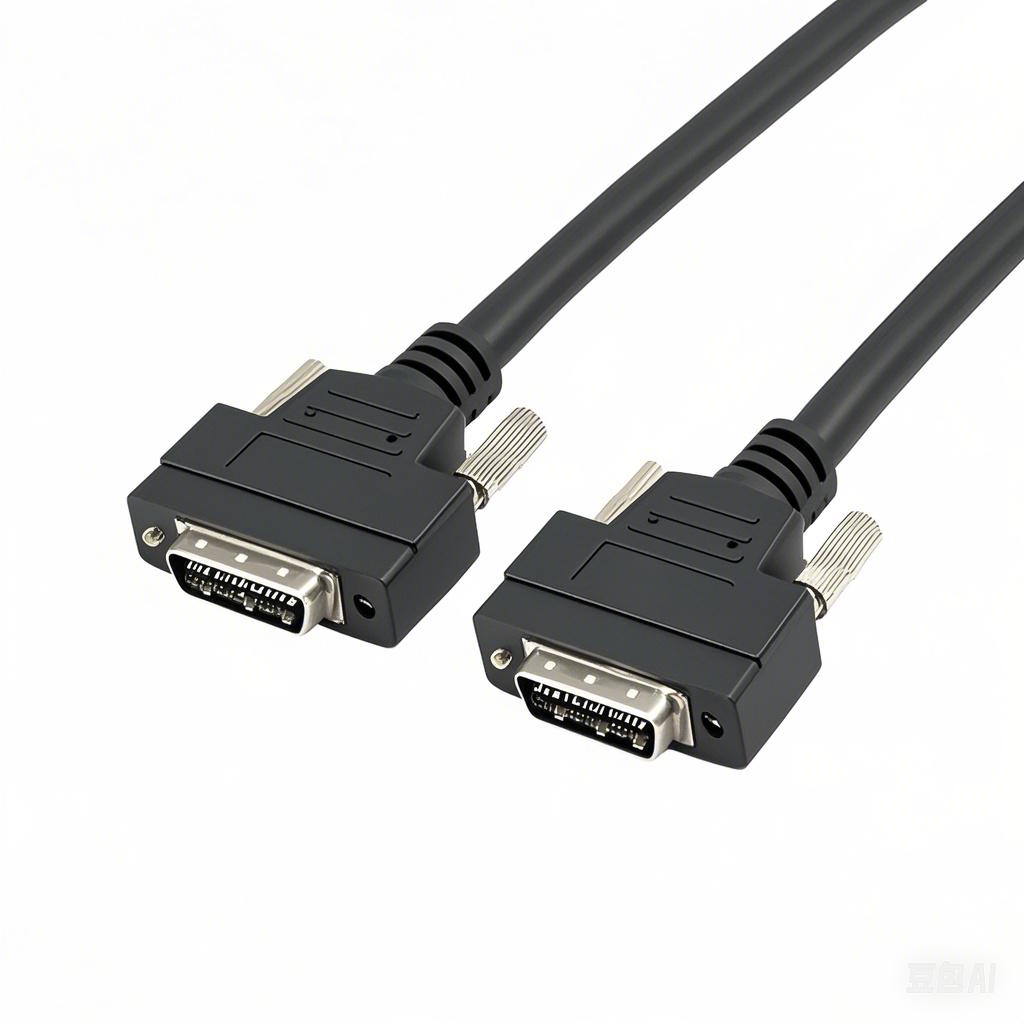
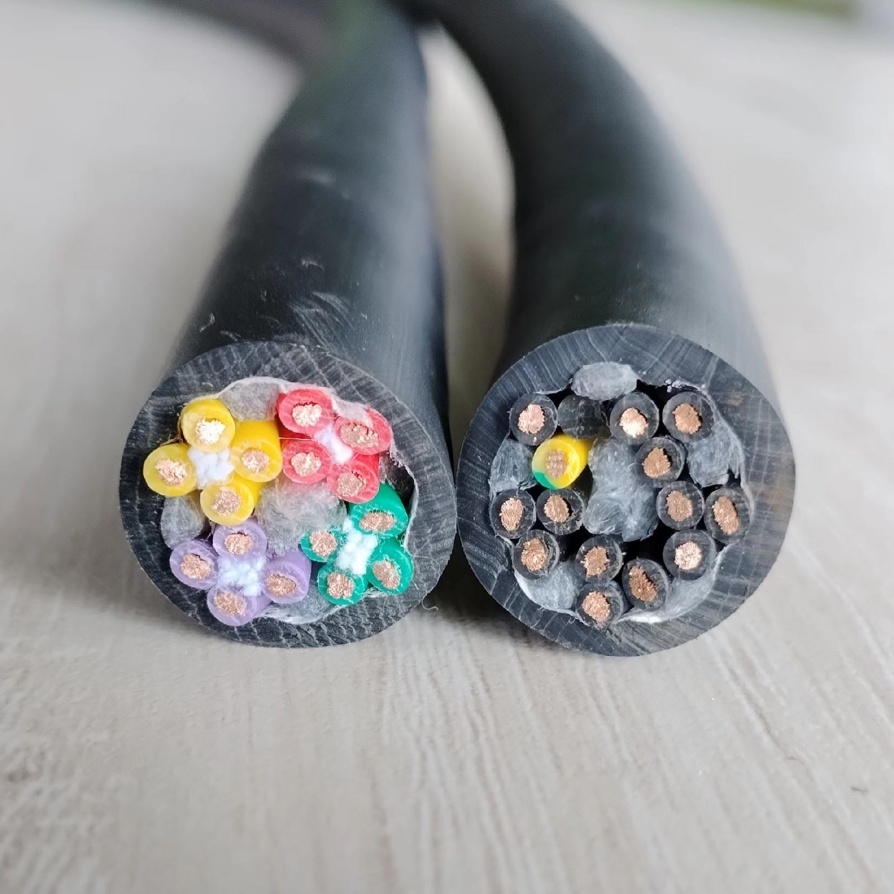
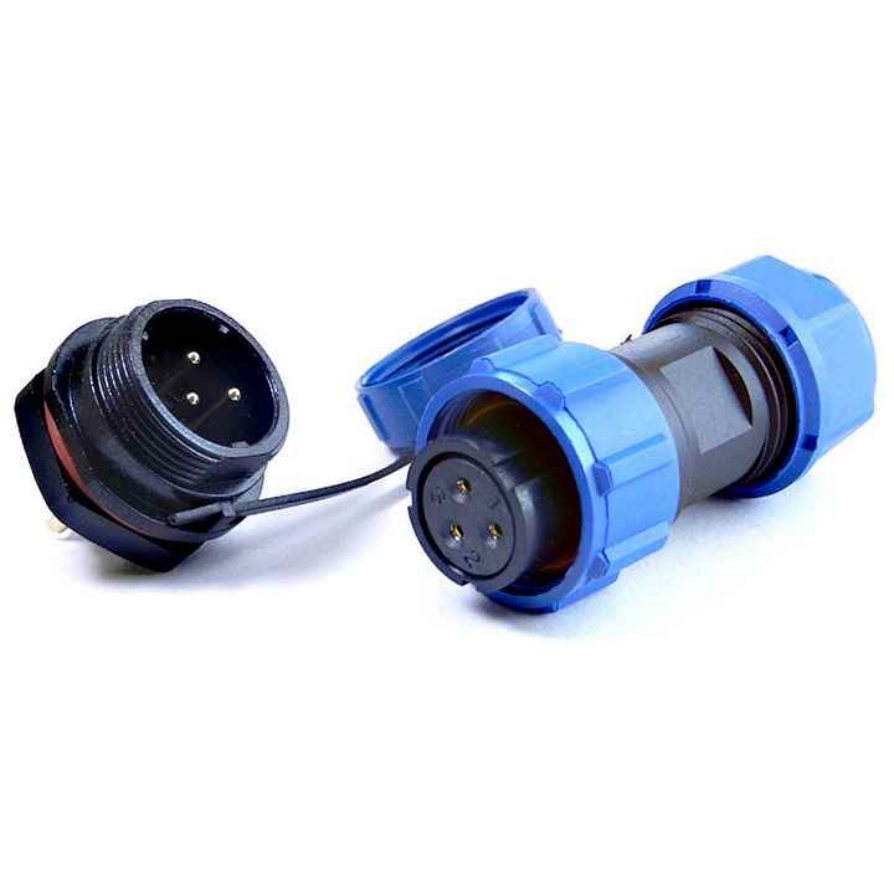
In modern machine vision, the cable is no of the most critical components for system stability. When cameras must be placed far from the controller—on overhead gantries, across large inspection lines, or outdoors—standard short cables often fail. This guide focuses on long-distance machine vision cablesand the practical techniques that ensure reliable extended transmission.
1. Why Long-Distance Transmission Is a Challenge
Moving a camera just a few extra meters can introduce several issues:
Signal Attenuation: High-frequency components of the image signal degrade faster than low-frequency ones. This leads to bit errors, requiring retransmissions that lower the effective frame rate.
Timing and Jitter: Interfaces like USB3 Vision and Camera Link are sensitive to signal delay and phase shift. Excessive cable length can cause data to arrive outside the receiver’s timing window, resulting in corrupted frames.
Noise and Interference: Long cables act like antennas, picking up electromagnetic interference (EMI) from motors, VFDs, and wireless equipment. Without proper shielding, this noise appears as artifacts or even crashes the link.
Impedance Mismatch: Poorly manufactured or overly long cables can cause signal reflections. These reflections manifest as ghosting, reduced contrast, and data loss.
Because of these factors, every vision standard defines maximum recommended cable lengths. For example, passive USB3 Vision cables are typically limited to around 3–5 meters, and GigE to 100 metersover CAT6A. Exceeding these limits without proper planning leads to unstable systems and costly downtime.
2. Choosing the Right Cable Technology
The first step in any long-distance project is selecting the appropriate cable technology based on your distance, speed, and environment.
2.1 High-Quality Passive Copper Cables
For distances just beyond the typical limit, a premium passive copper cable is often sufficient. These cables use thicker conductors and superior shielding to minimize loss.
USB3 Vision: High-quality passive cables can reach up to 8 meters, compared to the standard 3–5 meters.
GigE / 10GigE Vision: CAT6A cables can reliably achieve 100 metersat 1 Gbps, and often 10 Gbps in low-noise environments.
Camera Link: Passive cables can reach up to 10–15 metersin some configurations, though this is highly dependent on the camera and frame grabber.
Best for: Moderate extensions where cost is a primary concern and the environment is not excessively noisy.
2.2 Active Copper Cables (Redriver / Repeater)
When you need more length than passive cables allow, active cables are the next step. They contain tiny signal conditioning chips that amplify and reshape the signal, compensating for cable losses.
USB3 Vision: Active cables can extend the range to 15 metersor more.
Camera Link / CoaXPress: Active cables can push the limits from 10–15 meters to 30 metersor beyond.
Important: Active cables require power, usually from the host connection. They also add a small amount of latency and are more expensive than passive cables.
2.3 Fiber Optic Cables (The Ultimate Long-Distance Solution)
For the longest distances and harshest electrical environments, fiber optic cables are the gold standard.
USB3 Vision Active Optical Cables (AOC): By converting the electrical signal to light, these cables can achieve distances of 50 to over 100 meterswith near-zero EMI susceptibility.
GigE / 10GigE over Fiber: Standard single-mode fiber can reach 10 kilometers(6+ miles) using conventional Ethernet transceivers.
CoaXPress over Fiber: This emerging technology can extend CoaXPress links from 40 meters to over 100 kilometers.
Best for: Large facilities, outdoor use, areas with extreme EMI, and any application where the camera is hundreds of meters or even kilometers from the controller.
3. Matching Cable Type to Your Vision Standard
Each vision interface has its own characteristics that influence the best long-distance strategy.
Interface
Standard Copper Limit
Long-Distance Solutions
USB3 Vision
~3-5 m (passive)
• High-quality passive: up to ~8 m • Active copper: 10–20 m • AOC (fiber): 50–100+ m
GigE / 10GigE
100 m (CAT6A)
• CAT6A/7: 100 m at 1/10 Gbps • Fiber optic: up to 10 km+
Camera Link / CXP
~10-15 m
• High-quality coax: ~10-15 m • Active coax: up to ~30 m • CXP over fiber: >100 km
Camera Link HS
~15 m
• Copper: up to ~15 m • Fiber: 100 m to >300 m
4. Cable Construction: The Secrets to Extended Transmission
A cable’s internal construction is paramount for long-distance reliability.
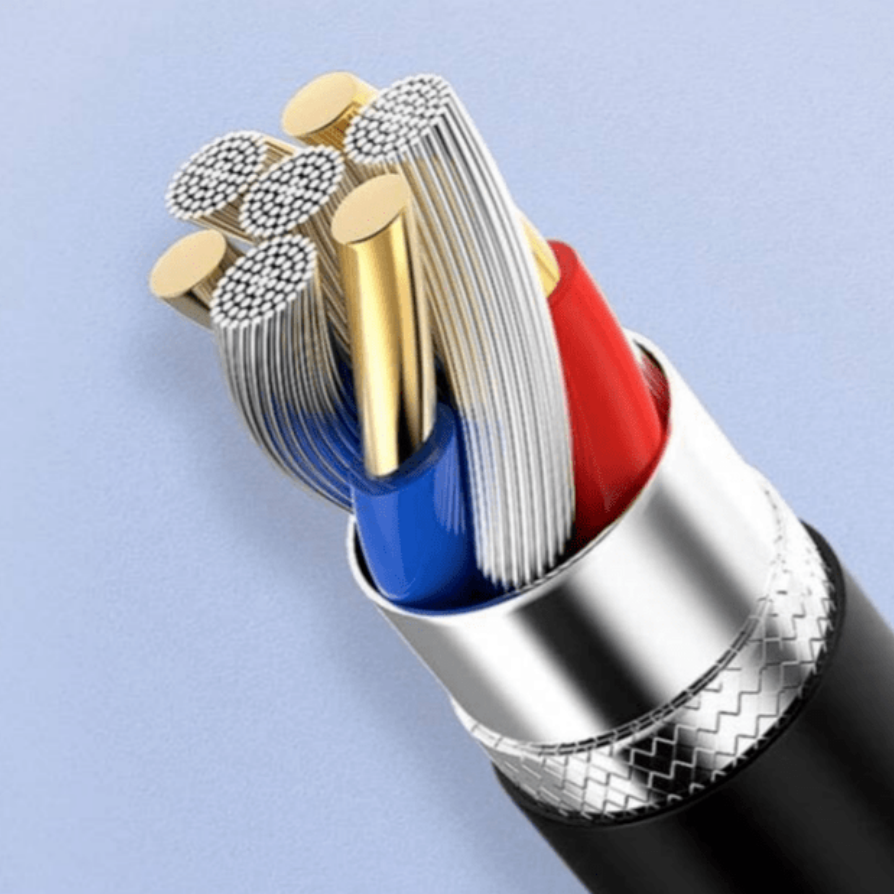
Conductor Material and Gauge (AWG): Oxygen-free copper offers the best conductivity. A lower AWG number means a thicker wire, which reduces resistance and signal loss. For long runs, 24 AWG or thickeris recommended.
Insulation and Dielectric: Low-loss dielectric materials (e.g., foam PE, FEP) minimize signal absorption. A consistent dielectric ensures stable impedance, which is critical for preventing reflections.
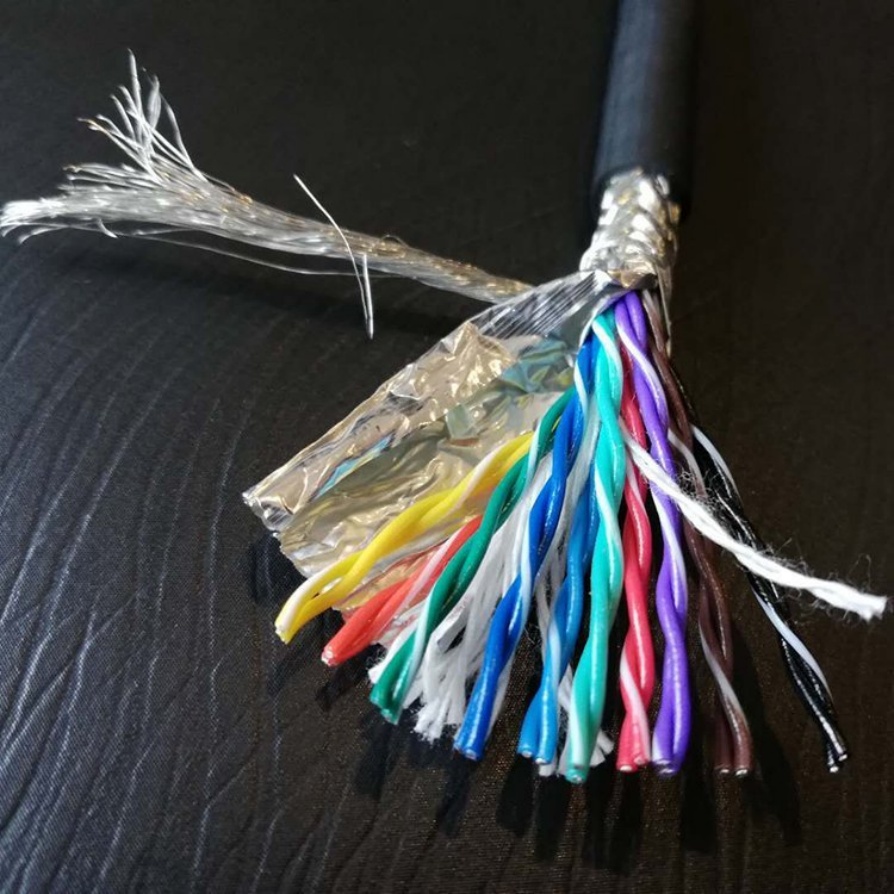
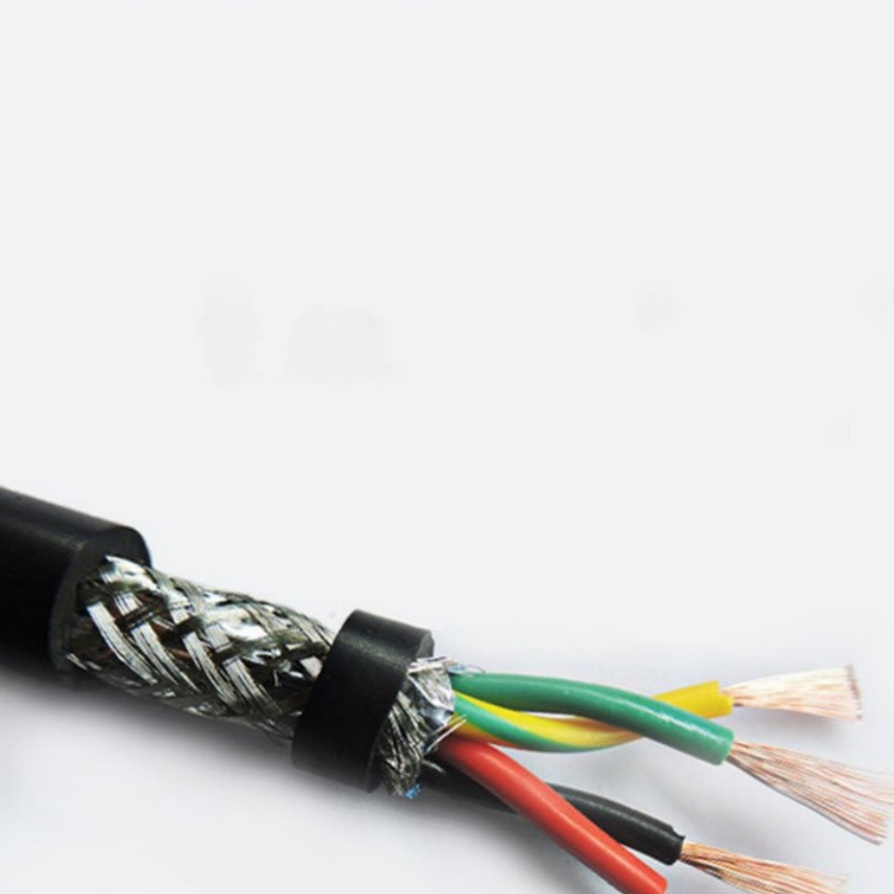
Shielding: The First Line of Defense Against Noise: Long cables are more susceptible to EMI. Look for 360° shieldingthat combines aluminum foil (for high-frequency noise) and a high-coverage braid (for low-frequency noise). The shield must be continuous from connector to connector.
5. Managing Signal Integrity and Skew
For high-resolution, high-frame-rate cameras, two subtle factors become critical over long distances: attenuationand skew.
5.1 Attenuation
Attenuation is the loss of signal strength. It increases with frequency and distance. To manage it:
Use the thickest, highest-quality cable possible.
Keep cable length to the absolute minimum required.
For copper, stay within the standard’s recommended maximum length.
5.2 Skew
Skew is the timing difference between paired signals (e.g., the + and – legs of a differential pair). Excessive skew prevents the receiver from correctly decoding the data, leading to bit errors. This is especially critical for Camera Linkand 10GigE. Cables designed for long-distance transmission carefully control the twist pitch and pair geometry to minimize skew.
6. Installation Best Practices
Even the best cable will fail if installed incorrectly. Follow these rules for any long cable run:
Plan the Shortest Possible Path: Every meter saved reduces attenuation and skew.
Manage Bends Carefully: Adhere to the minimum bend radius specified by the manufacturer. A sharp bend can permanently damage the cable’s electrical characteristics.
Separate from Noise Sources: Route vision cables away from power lines, motor cables, and VFDs. If they must cross, do so at a 90-degree angle.
Support the Cable Properly: Use appropriate clips and trays. Do not stretch the cable taut.
Terminate and Dress Correctly: For field-terminated cables, ensure proper technique to maintain pair geometry and impedance. Avoid tight cable ties and sharp bends at the connector.
Test Before Finalizing: Whenever possible, test the full cable run with your actual camera and frame grabber before committing to the installation.
7. Real-World Application Scenarios
Large Logistics Hub: A 10GigE fiber opticbackbone allows cameras positioned anywhere in a massive warehouse to connect to a central server room over a kilometer away, simplifying the network and eliminating repeaters.
Automotive Final Assembly: USB3 Vision active optical cables (AOCs)allow for 50+ meter cable runs from overhead cameras to a control room, completely immune to the intense EMI from welding robots and conveyor motors.
Outdoor Pipeline Inspection: CoaXPress over single-mode fiberenables a camera system to inspect a remote pipeline section over 20 kilometers away, leveraging fiber’s immunity to lightning and other environmental electrical noise.
8. A Practical Selection Checklist
Use this checklist to choose your long-distance cable:
Interface: USB3, GigE, CXP, etc.?
Required Distance: In meters/feet?
Required Data Rate: Camera resolution and frame rate?
Future-Proofing: Will higher resolution cameras be used later?
By answering these questions, you can systematically narrow down the options to find the most reliable and cost-effective solution.
Conclusion
Long-distance machine vision is not about finding a single “magic cable,” but about making informed engineering choices. By understanding the limitations of copper, the power of active electronics, and the superiority of fiber for extreme distances, you can design a system that is stable, high-performing, and reliable for years to come.
Meta Description: Discover premium Robotic Vision System Cables engineered for seamless data transmission, durability, and precision in industrial automation. Ensure flawless vision system performance.
Enhance Automation Precision with.
Enhance the reliability and performance of your automated systems with our Industrial-Grade Machine Vision Cable—engineered to deliver unparalleled signal integrity, durability, and speed for demanding industrial applications. Designed f.
Meta Description: Experience seamless 4K/8K video transmission with our High-Speed Anti-Interference Vision Cable. Engineered for crystal-clear visuals, robust durability, and interference-free performance. Perfect for gaming, profes.
Product Overview: Machine Vision Cables
Machine vision cables are specialized components designed to ensure high-speed, stable data transmission and signal integrity in automated imaging systems. Key features include:
Technical S.
Meta Description: Discover the Flexible & Bend-Resistant Vision Cable, engineered for precision imaging in demanding environments. Durable, reliable, and built to last. Perfect for industrial, medical, and robotic applications.
Int.
Shielded Twisted-Pair Vision Cable – Ultra-Clear Signal Transmission for Demanding Environments
Ensure flawless video and data transmission in high-interference environments with our Shielded Twisted-Pair (STP) Vision Cable. Engineere.
Elevate your visual data transmission with the IP67 Waterproof Vision Connection Cable, engineered to deliver seamless performance in the harshest conditions. Designed for industrial, outdoor, and mission-critical applications, this rugg.
High-speed factories demand flawless synchronization between machines and vision systems. Yet, challenges like electromagnetic interference (EMI), cable fatigue, and data bottlenecks often disrupt operations. The right machine vision cab.
The Precision Imaging Dedicated Vision Cable is a cutting-edge connectivity solution designed to deliver crystal-clear image transmission in high-stakes environments. Optimized for industrial automation, medical imaging, machine vision, .
Subtitle: A High-Performance Signal Cable Designed for 3D Scanners, Ensuring Lossless Data and Minimal Latency
Product OverviewThe 3D Scanner Vision Signal Cable is a premium signal transmission cable engineered for both industrial a.