New Drag Chain Rated Machine Vision Cable 10m Achieves 10 Million Ben...
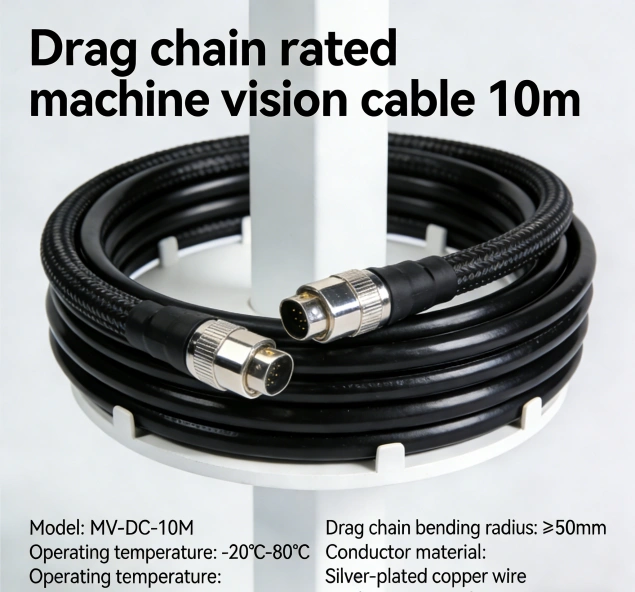
In high-speed, high-precision machine vision applications, a single cable failure can halt an entire production line, leading to costly downtime and missed deadlines. The weakest link is often the cable connecting the camera to the frame grabber or controller. This is where a purpose-built solution like the new 10-meter drag chain rated machine vision cablewith a verified 10 million bending cyclerating becomes essential.
This article explores the engineering behind this performance, its key specifications, and how to select the right cable for your specific application.
Why Standard Cables Fail in Dynamic Applications
Standard Ethernet or industrial cables are not designed for the intense stress of continuous motion. In a drag chain, a cable undergoes millions of repeated flexes. Key factors that lead to premature failure include:
- Insufficient Flex Life:Standard cables are typically rated for tens or hundreds of thousands of cycles, far below the demands of modern automation.
- Tight Bending Radius:In compact designs, cables are bent sharply, accelerating fatigue in the conductors and insulation.
- Mechanical Stress:Cables experience not just bending, but also tension, compression, and torsion, especially in 3D robot movements.
- Harsh Environments:Exposure to oil, coolant, metal shavings, and electromagnetic interference (EMI) can degrade both the cable’s physical integrity and signal quality.
For a 10-meter travel distance in a high-speed 3C or automotive inspection line, a cable must reliably handle millions of U-shaped bending cycles. This is why leading manufacturers now offer cables with 10 million cycleratings, achieved through advanced materials and construction .
Engineering a 10 Million Cycle, 10m Drag Chain Cable
Achieving a 10 million cycle life at a 10-meter length is the result of meticulous engineering at every level.
1. Conductor Design
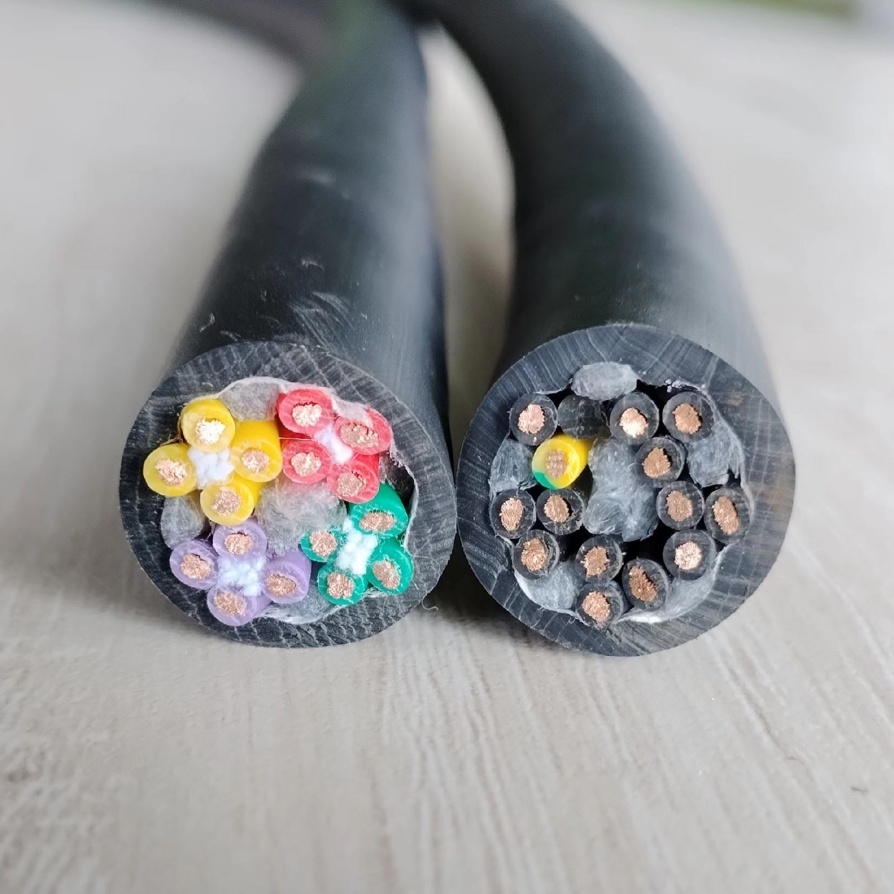
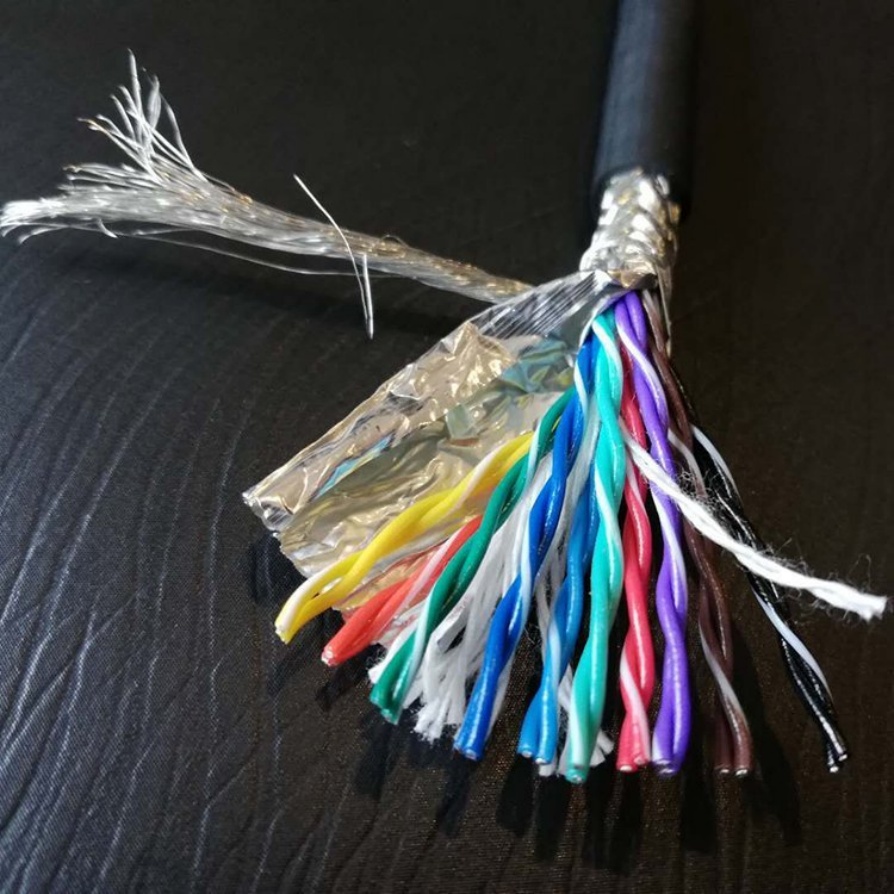
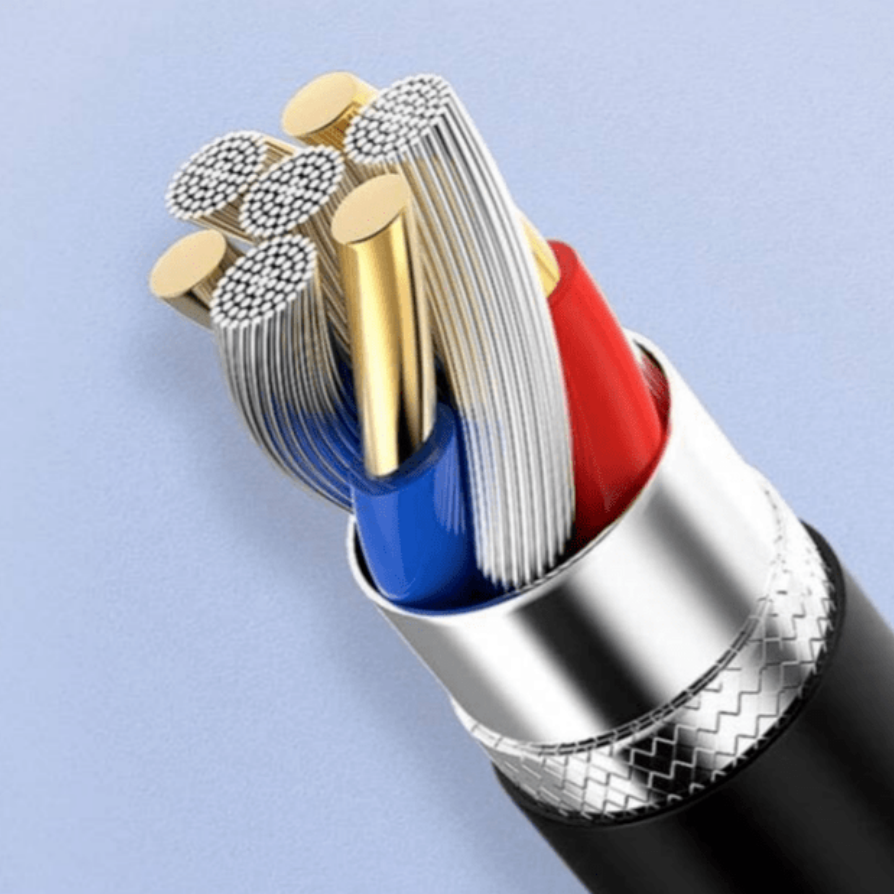
- Ultra-Fine Stranding:Conductors are made of hundreds of ultra-fine, high-purity oxygen-free copper strands, designed to bend without work-hardening or breaking.
- Optimized Lay Length:The direction and pitch of the strands are controlled to balance flexibility and tensile strength, preventing internal “memory” that can cause kinking .
2. Insulation & Pair Geometry
- Flexible Insulation:Special elastomer or TPEE materials are used to maintain integrity over millions of flexes.
- Differential Pair Geometry:For data cables, precise pair twisting and shielding minimize crosstalk and signal loss, which is critical for high-speed GigE Vision or CoaXPress signals .
3. Shielding for Signal Integrity
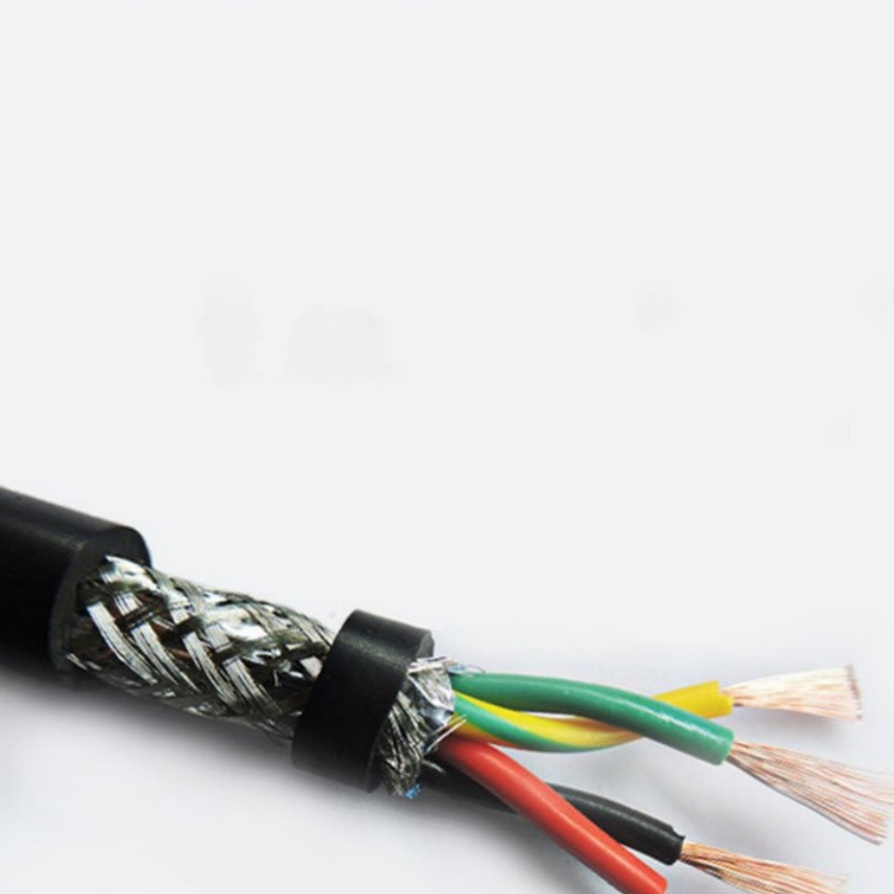
- Multi-Layer Shielding:A combination of aluminum foil and a high-density tinned copper braid provides excellent EMI/RFI protection, crucial for stable image transmission near motors and drives.
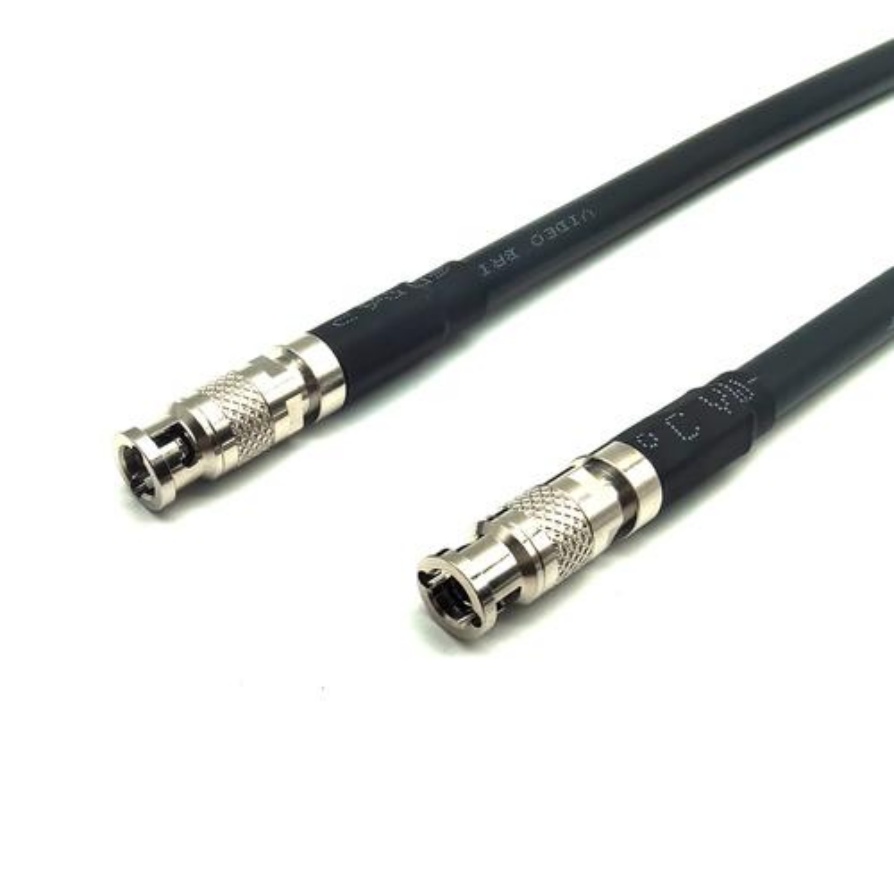
- 360° Shielding Contact:Connectors are designed to maintain continuous shielding contact from the cable to the metal shell, preventing signal leakage .
4. Jacket & Internal Structure
- High-Flex Jacket:Premium PUR (polyurethane)or TPU jackets offer superior abrasion, oil, and tear resistance, lasting 3-5 times longer than standard PVC in dynamic applications.
- Internal Support:A central strength member (like aramid fiber) prevents the cable from knotting or telescoping inside the drag chain, a key to achieving long life at full length .
5. Bend Radius & Travel
- Sufficient Bend Radius:A minimum bend radius of 8–10 times the cable diameter (8D–10D)is essential for 10 million+ cycles. For a 7-8mm diameter cable, this means a 56-80mm radius.
- Long Travel Performance:Cables are tested over long, smooth arcs within the drag chain, not just tight U-bends. This ensures reliable performance for 10m travel distances common in gantry systems .
6. Connector & Assembly
- Ruggedized Housings:Metal or reinforced plastic shells protect the internal contacts from vibration and mechanical stress.
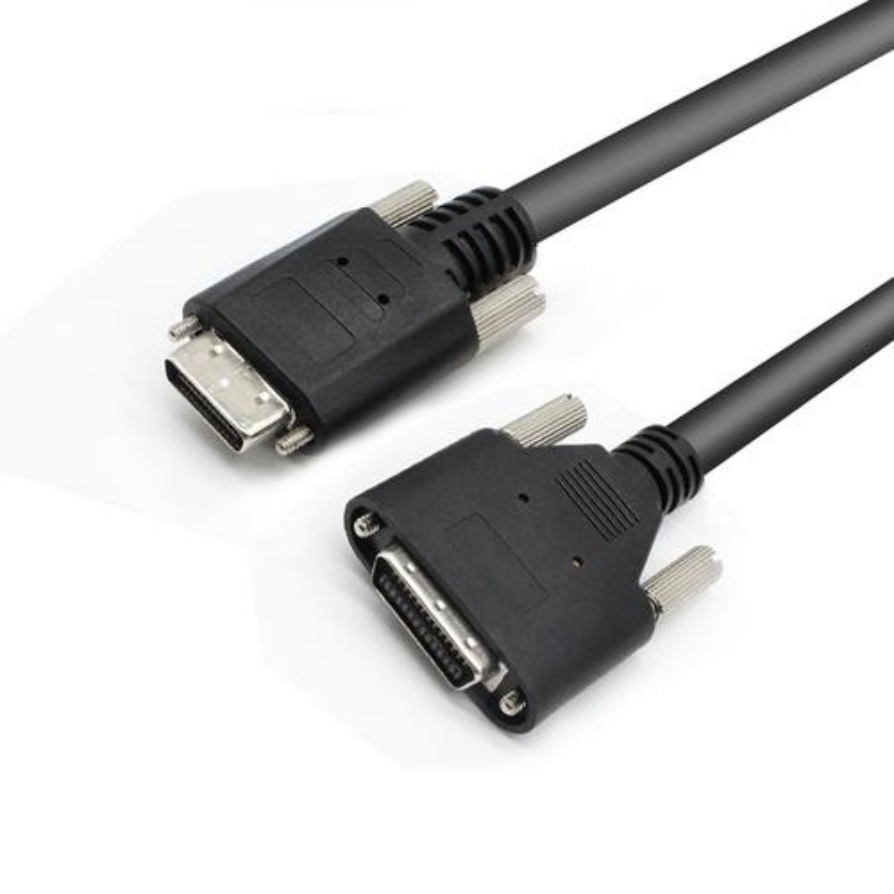
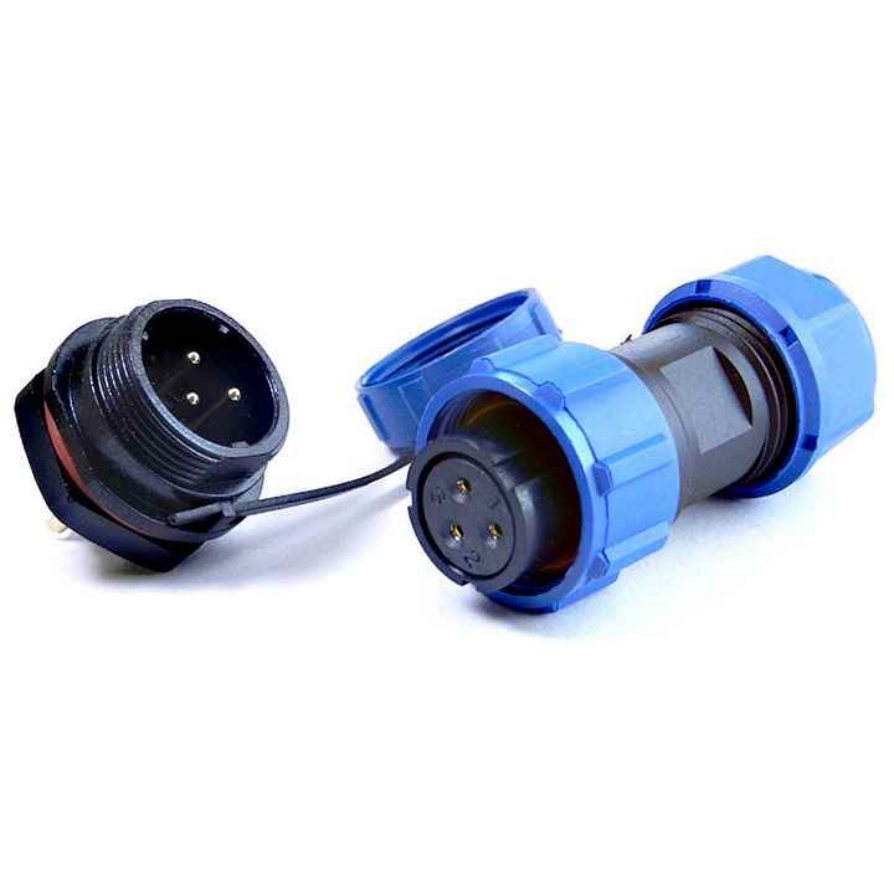
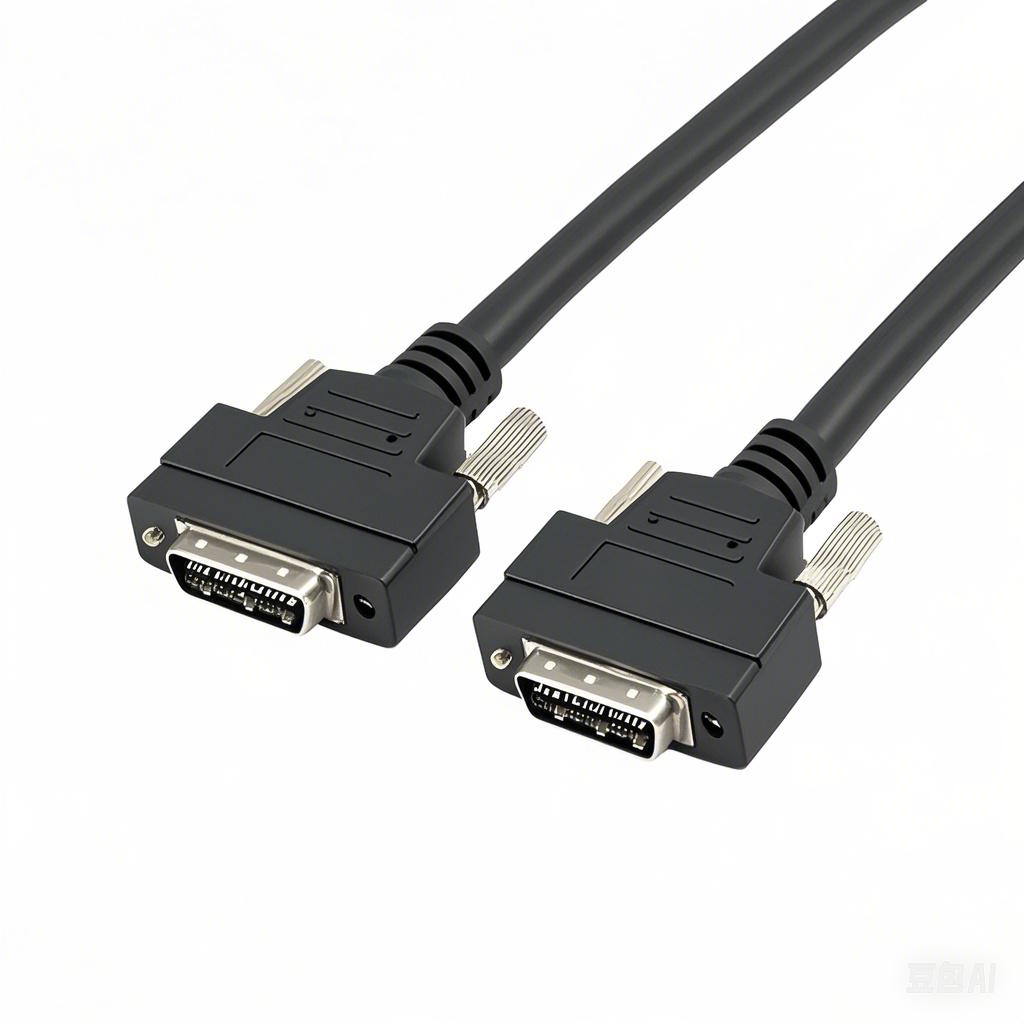
- Secure Locking:Screw-lock or latch mechanisms on GigE and USB3 Vision connectors prevent accidental disconnection during high-motion operations .
Key Specifications to Look For
When evaluating a 10m drag chain rated machine vision cable, prioritize these specifications:
- Bending Life:Look for ≥10 milliondrag chain-rated bending cycles, ideally with a test report.
- Bend Radius:Ensure the minimum dynamic bend radius is ≥8D.
- Travel Distance:Verify the cable is validated for 10 metersof travel in a standard industrial drag chain.
- Shielding:For data cables, double-shielded (foil + braid)construction is recommended for noisy environments.
- Jacket Material:PURis the top choice for high-flex, oil-resistant applications. TPU is also excellent for flexibility and low-temperature performance.
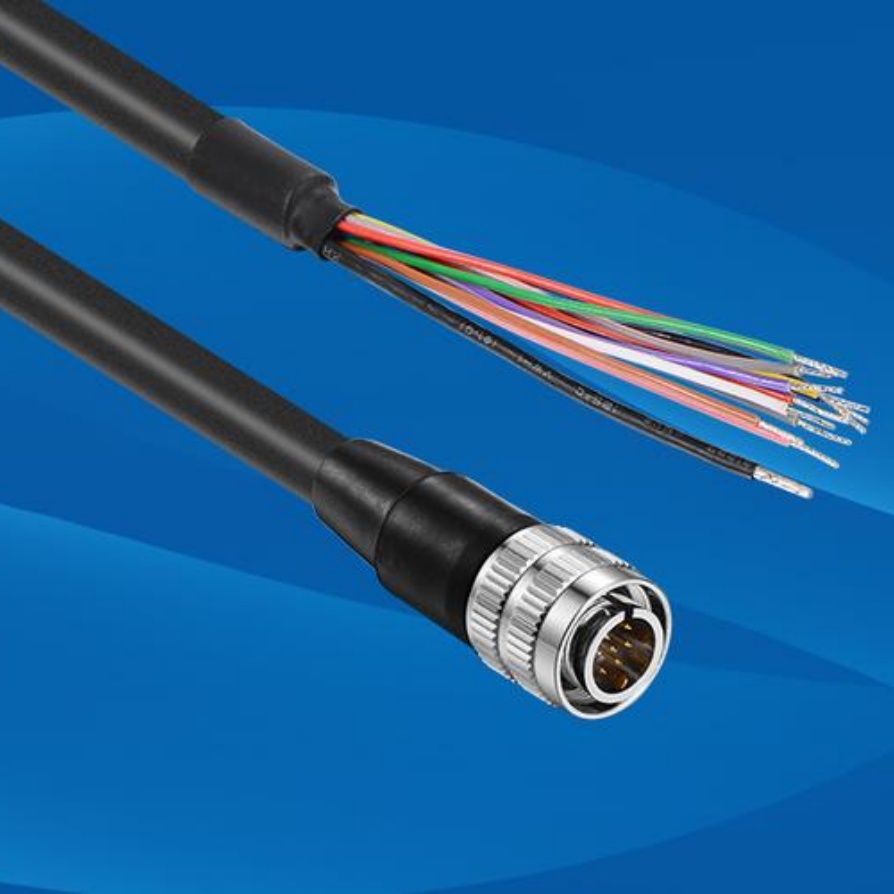
- Connector Type:Match the connector to your camera (e.g., GigE Vision screw-lock, USB3 Vision locking micro-B, M12, Hirose).
- Environmental Rating:Check for resistance to oil, coolant, UV, and a wide operating temperature range (e.g., -40°C to +90°C).
- Compliance:Look for compliance with relevant standards like RoHS and, for USB3 Vision, the USB3 Vision standard .
Real-World Applications
A 10m, 10-million-cycle cable is not just a specification; it’s a critical component in demanding industries:
- Automotive & EV Manufacturing:Powers 3D body-in-white inspection, weld seam tracking, and final assembly verification.
- Electronics (3C) & Semiconductor:Enables high-speed PCB and component inspection on long gantries where cables travel several meters per second.
- Logistics & Warehousing:Supports vision-guided robots (AGVs/AMRs) that navigate dynamic paths with long cable runs.
- Food & Beverage / Pharma:With the right jacket material, it withstands high-pressure washdowns and caustic cleaning agents .
How to Choose the Right Cable
Follow these steps to select the optimal cable for your system:
- Define the Motion Profile:Document the travel distance, cycle frequency, acceleration, and bend radius.
- Match the Data Rate:Choose a cable rated for your application’s speed (e.g., 1Gbps/10Gbps Ethernet, USB3 Vision, CoaXPress).
- Select the Right Connector:Ensure 100% compatibility with your camera and frame grabber/controller.
- Prioritize the Environment:Choose a jacket (PUR, TPU) that can withstand your specific chemicals, temperatures, and cleaning processes.
- Verify the Data Sheet:Look for a manufacturer with published test data for 10 million drag chain cycles at your required length.
- Test in Your System:Whenever possible, perform a long-term test in your actual setup before full deployment .
Experience the RFS Difference
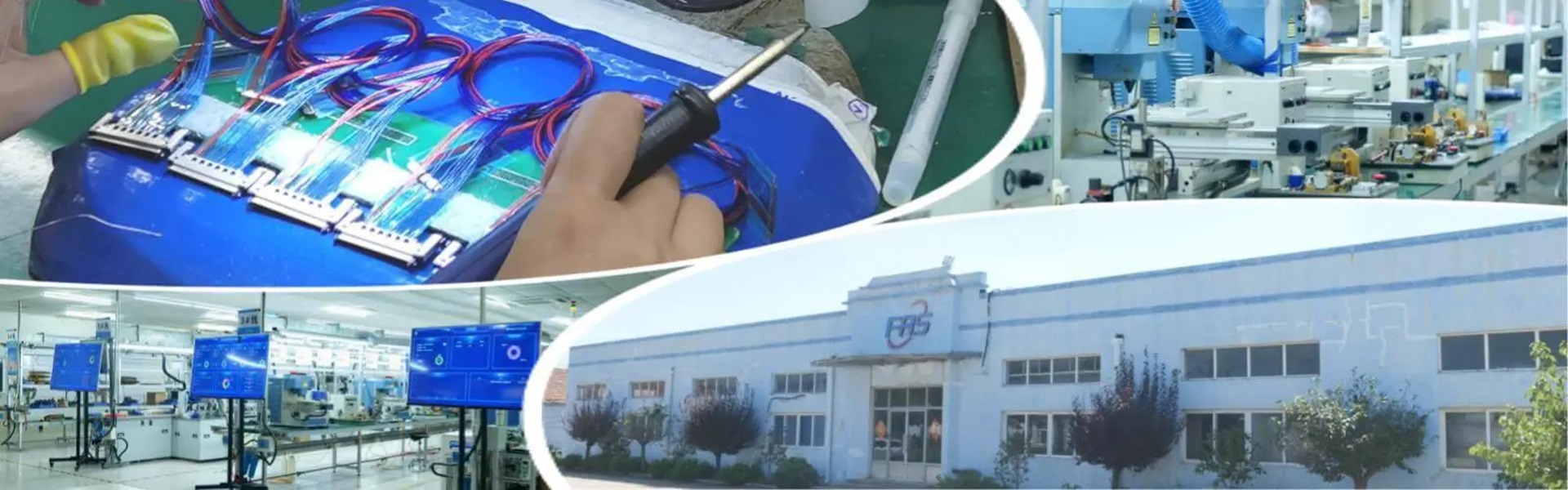
For engineers who demand uncompromising reliability, RFSis a trusted partner for mission-critical cable solutions. Our new 10-meter drag chain rated machine vision cableis engineered to excel in the most demanding motion applications, combining a 10 million bending cyclelife with exceptional signal integrity and robust construction.
We don’t just manufacture cables; we provide a complete application-driven solution. Our engineering team works with you to validate cable performance in your specific setup, ensuring a seamless integration and a worry-free deployment.
Choose RFS for machine vision cables that keep your production line moving, not stopping.
Contact the RFS team today to discuss your next high-performance cable project.
Contact Us Right Now:
TEL&WECHAT: +86-1881-875-005 (Wechat)
E-MAIL: sales@custom-cable-assemblies.com